In Mexico, Feelings Have a Flavor
In Spanish, "saber" means both "to know" and "to taste." A night can taste like pain. That small discovery revealed how emotion in Mexico lives in the body, with heat, weight, and flavor.
Before Mexico, I thought strength meant controlling what you showed. Then I heard a song accept defeat and still cry out from the pain, and realized dignity and emotion are not opposites here.
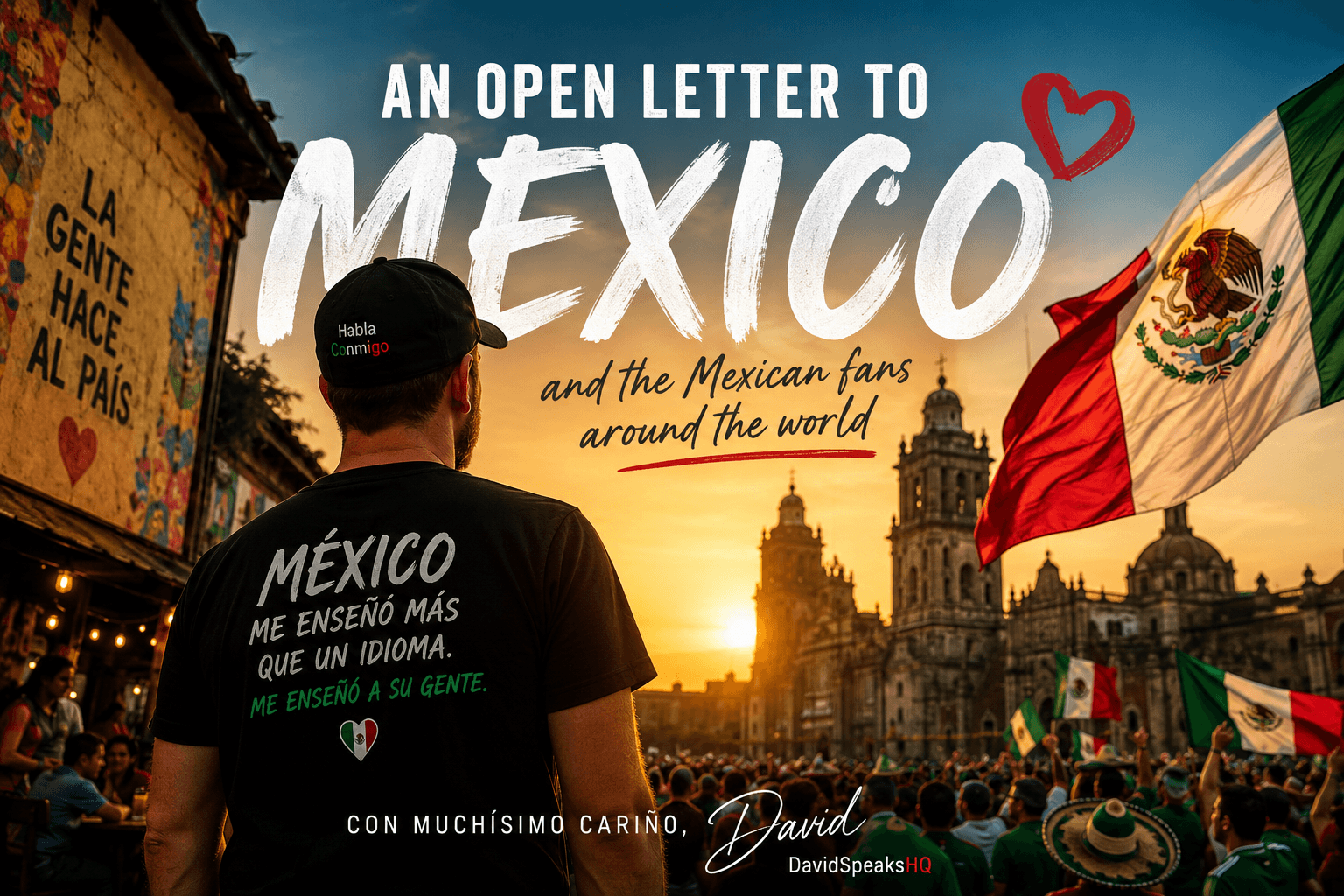
I came to Mexico to learn Spanish and ended up falling in love with a whole country. An open letter to its people, its culture, and its fans who sing, win or lose.
In Canada, calling someone fat is a hate crime. In Mexico, it's how your tía shows she loves you. The cultural decoding behind Mexican nicknames, by a polyglot who has been called gordito within 40 seconds of meeting strangers.
Most languages have words. Mexican Spanish has tantito. It means a little. It means a lot. It means wait. It means almost. It means barely. It means everything except the one thing your textbook said it meant.
I lived in 6 cities before Mexico. London made me apologize for breathing. New York taught me to weaponize my elbows. None of them prepared me for the way Mexicans walk down a sidewalk.
The first Mexican breakfast I sat down to in Mérida had carnitas, beans, two kinds of salsa, a sweet tamale, and a small mountain of tortillas. It was 8:15 in the morning. I have not been the same person since.
One word. Twelve meanings. None of them in your textbook. Pásele is the most-used Mexican Spanish word that no Spanish class will teach you. Here's what it actually does.
It's 38°C in Mérida. Every Mexican adult on the street is wearing long pants. Meanwhile I'm in cargo shorts and a Tilley hat, and a guy at the corner store just called me 'jefe' with such soft amusement that I had to go home and think about my life.